Research, and what it changed
Research is part of how I design, not a phase before it. At Juva that meant a two-week beta whose readout led with what didn’t work; at Orita, a UX audit, a card sort, a competitive teardown, and interviews with colleagues and agency users. The questions are the same on every surface: what the business needs it to do, what the person in front of it needs, and what it has to fit into.
The research program
- March 2025The critique that started it“It’s called Lift Calculations, but it’s on the viewer to figure out how we arrived at these.”
- Fall 2025The research that grounded the workIn parallel I ran the research that grounded the work: a UX audit, a card sort, a competitive teardown of retention dashboards, and interviews — three colleagues on the customer-facing side, three agency-side users.
- February 2026The all-hands retention brainstormI built the board, ran the session, and synthesized about a hundred and fifty stickies into five problem statements for leadership.
- What it changedThe explainer layer, and the dashboard's three questionsThe interviews produced plain-language metric definitions and the working principle “one short paragraph or 3 bullets explain the logic, not the code.” The card sort fed the dashboard's split into outcome-focused tabs and the app-revamp brief. The frame for the whole dashboard was three customer questions: Is Orita working? Why? Where is the impact coming from?
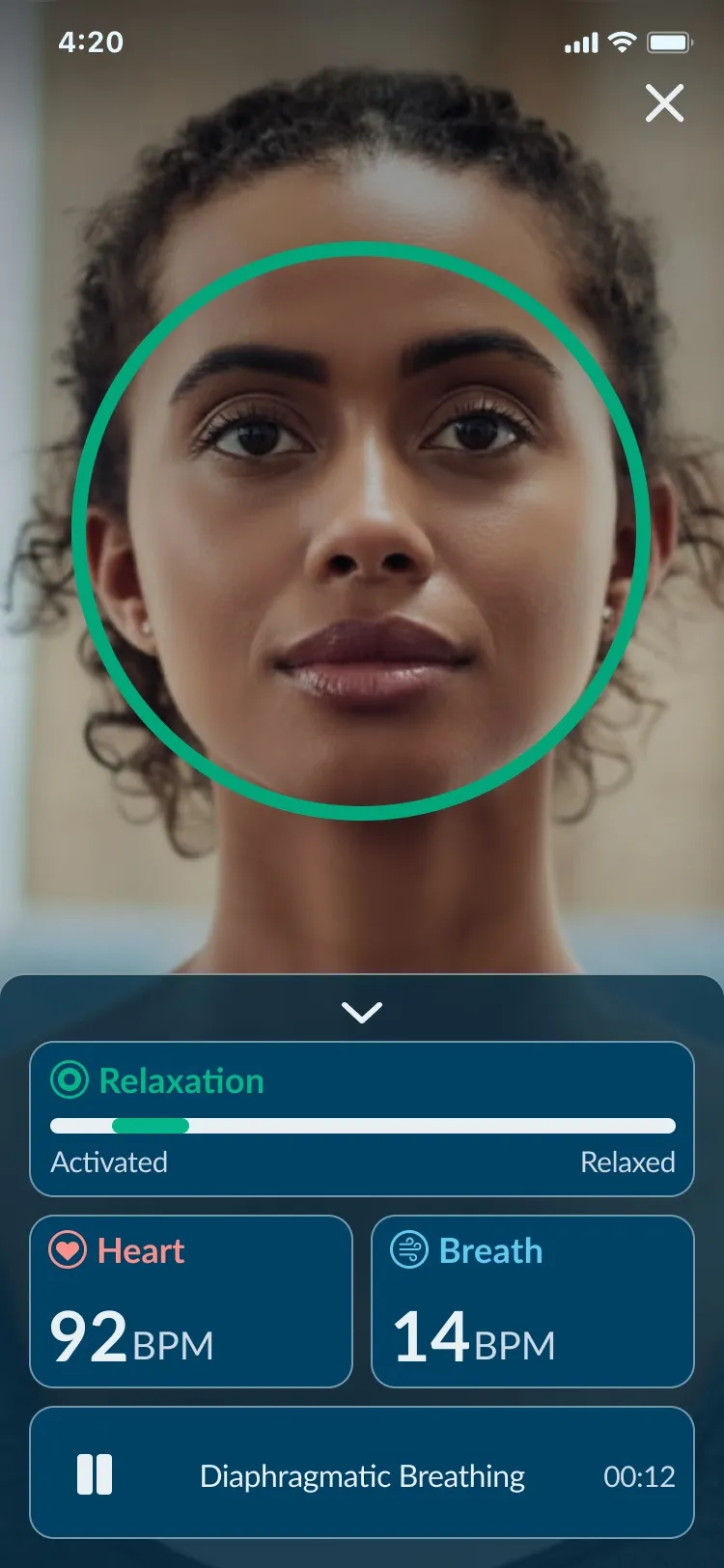 No clinician in the roomBiofeedback is a proven migraine treatment that barely exists; Juva Health set out to deliver it through a phone. My job for two years was the delivery itself: turning the program our chief medical officer ran, in-person, into an app that carries her judgment. This page walks through the how: the program’s structure, its instruments, its copy, and the one problem I never got to solve.